Recovery
Life at Casas Heddy
What makes Lanzarote so good for your health?

What makes Lanzarote so good for your health?
SUMMARY
Lanzarote has one of the best climates in the world for health and activities as the island is warm and dry with a stable climate all year, with an annual average around 22 degrees during daytime and close to 300 days of sun.
Warm, sunny climates have been used in medicine for decades to ease chronic pain and support rehabilitation, with research to back it up.
Warmth loosens stiff muscles and joints, which lets people move more and makes physiotherapy work better.
Those who gain most are people with rheumatic and skin conditions, breathing problems, and anyone recovering slowly or run down after a long winter.
Casas Heddy was built on this island in 1975 for exactly this reason, and has done climate-based rehabilitation here ever since.
If you live with chronic pain or stiffness, you know that the weather has a great impact on how you feel. Cold and damp weather makes the joints seize up, while warmth eases them. Lanzarote offers that warmth all year round and that is one of the reasons it has become a popular destination for rest, recovery and rehabilitation.
What is the climate actually like?
Lanzarote lies in the Atlantic ocean, straight off the coast of West Africa, at the eastern edge of the Canary Islands. Its climate is subtropical and unusually steady. The surrounding sea keeps temperatures from swinging far in either direction, so there is no real cold season and no punishing summer peak either:
An annual average temperature of around 20 to 21 degrees, with winters near 18 degrees and summers near 24.
Close to 300 days of sunshine a year, and an average of almost eight hours of direct sun daily.
Very little rain, usually under 150 mm across the whole year, most of it falling on a handful of winter days.
Low humidity and steady trade winds, which keep the heat comfortable rather than heavy.
The result is a place where you can train outdoors, swim and spend the day in daylight in January as easily as in July.
Why does a warm climate help the body?
The heat makes the trip pleasant, but the warm surroundings relax muscles and loosen stiff joints, making it less painful and daunting to move. People who can move more easily do more, and that is what turns a physiotherapy session into real progress.
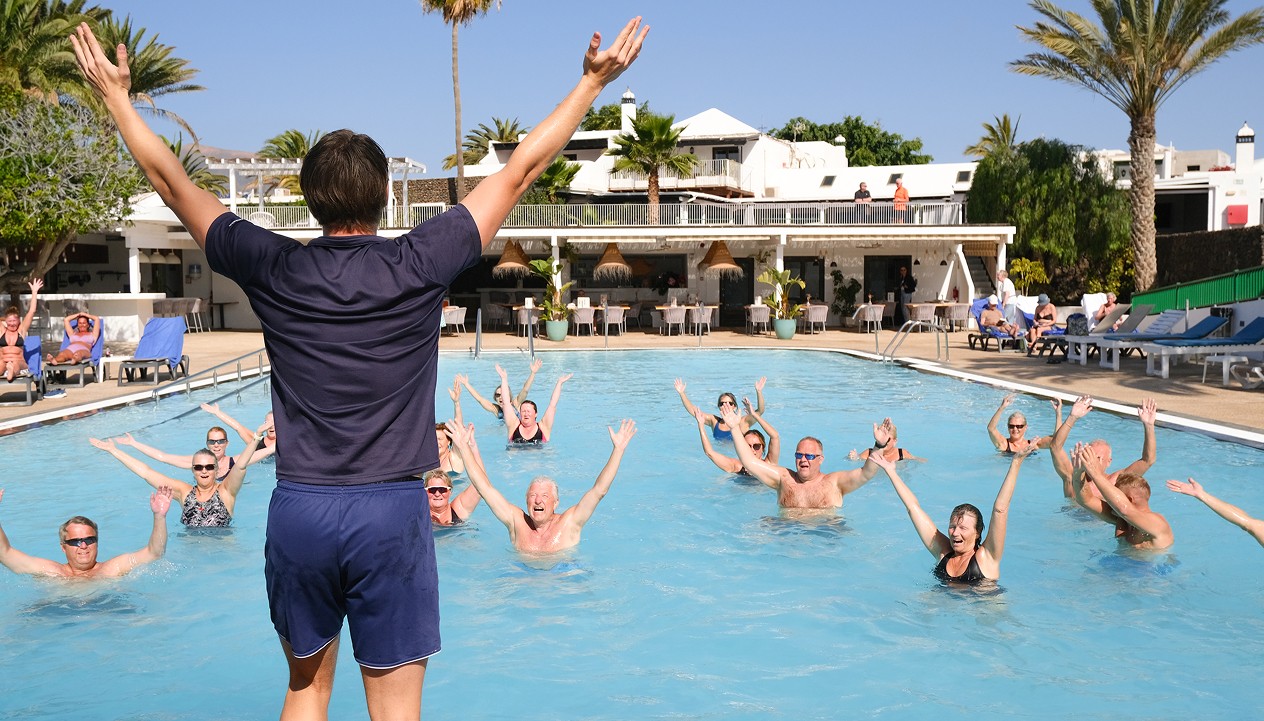
Clinical reviews describe the benefit as a combination: the warmth and the intensive daily physical work reinforce each other. A heated pool such as the one at Casas Heddy, takes the load off painful joints, so exercises that are hard on land become possible once you are in the water.
For many guests there is a second effect that has nothing to do with joints. A long, dark winter is hard on sleep, mood and energy. Weeks of daylight and time outdoors help with all three, which is part of why people often come home feeling better in ways they did not expect.
Is there real evidence, or just the feel-good factor?
There is evidence, and health systems have taken it seriously for a long time. Norway, for one, has publicly funded treatment trips to warm, sunny and dry climates for people with chronic illness since 1976, treating the climate as part of the medicine rather than a holiday.
Renewed trust from Norwegian health authorities: Four weeks in Lanzarote can change how you feel
Studies from these programmes back this up for specific conditions. Research on four-week rehabilitation stays in a warm climate found improved spinal mobility in patients with spinal arthritis (in latin: ankylosing spondylitis), with the benefit still measurable at a three-month check. Reviews of the field conclude that a genuine climate effect appears to sit on top of the exercise itself, particularly for inflammatory rheumatic conditions.
Who benefits most from the climate?
Warm, sunny climates tend to help the same conditions wherever guests travel from:
Inflammatory rheumatic diseases, such as rheumatoid arthritis, psoriatic arthritis and ankylosing spondylitis.
Psoriasis, where sun and warm salt water often calm the skin.
Late effects of polio.
Children and young people with asthma.
Beyond that list, the same climate helps a wider group: people rebuilding strength after surgery or injury, people worn down by stress and poor sleep, and older guests who simply move and feel better when they are warm. You do not need a diagnosis to benefit from being somewhere your body finds easier.
Is it only about the sun?
The weather is the main reason people come, but it is not the whole story. The entire island of Lanzarote has been a UNESCO Biosphere Reserve since 1993, and most of it is protected and undeveloped, with tourism kept to the coast. Away from the resorts the air is clean and the pace is slow, which matters when the point of a stay is to rest and recover rather than to sightsee.
For anyone managing pain or fatigue, that calm is part of the treatment. A steady daily rhythm, good food, time outside and a quiet setting make it far easier to stay with a programme than it would be at home, where ordinary life keeps interrupting.
How does Casas Heddy use the climate?
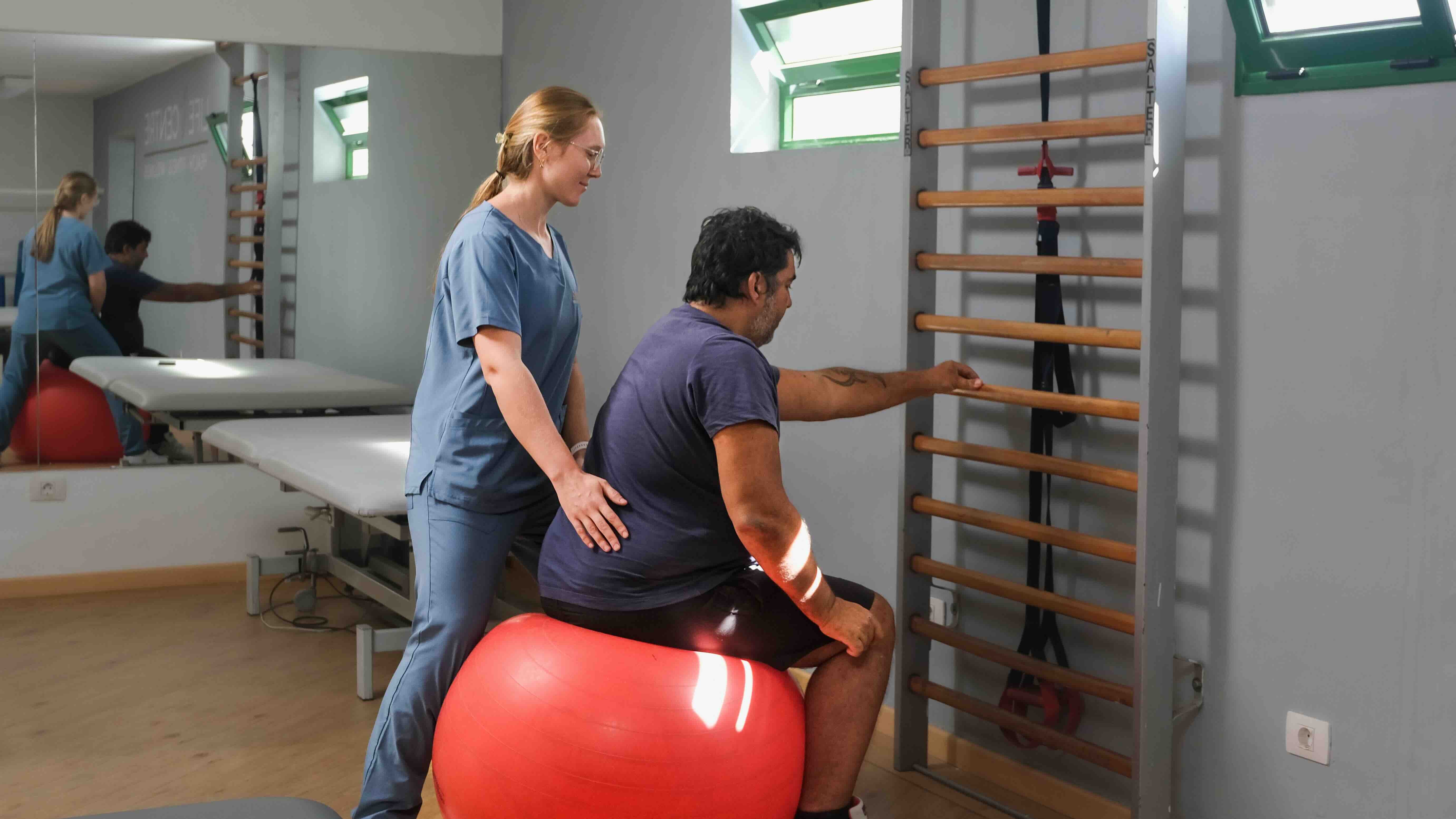
Casas Heddy was built on Lanzarote in 1975 for exactly this reason. The resort pairs a warm-weather setting with a full clinic, so guests train and are treated every day while the climate does its part in the background. Heated saltwater pools, outdoor training areas and year-round sun mean the programme runs the same in winter as in summer.
Guests come from across Europe, some book their stay privately, others through public health programmes, which means the same climate medicine clinicians have relied on for decades is available to anyone who needs it. The climate is the one part of a stay you cannot recreate at home, and it is what makes the rest of the programme work.
Frequently asked questions about Lanzarote and health
Is Lanzarote warm enough in winter for a healthy stay?
Yes. Winter averages sit near 18 degrees with long, sunny days, which is why the island is busiest with recovery and rehabilitation guests through the colder months elsewhere.
When is the best time of year to go?
Any time. The climate is stable year-round, so the programme runs the same in January as in July. Many guests choose winter to escape cold and damp at home.
Do I need a specific diagnosis to benefit?
No. Many of our guests don't have a diagnosis, but rather spend time to focus on themselves, exercises and relaxation. A stay at Casas Heddy can be a few days and for a longer period, depending on whethe om r you want a stay
Is the climate effect proven, or just anecdotal?
There is published research, much of it from publicly funded climate-therapy programmes, showing lasting benefits for some rheumatic conditions, alongside a broad clinical consensus that warmth makes rehabilitation more effective.
Photo by Thibault Mokuenko on Unsplash